

How to Choose Right Commercial Floor Scrubber for Your Venue-2026
Release time: 2025-11-18
Content
- Step 1: Analyze Your Floor Type and Surface Conditions
- Step 2: Walk-Behind vs. Ride-On Floor Scrubbers: Which Fits Your Operational Needs?
- Step 3: Key Technical Specifications to Prioritize
- Step 4: Maintenance and After-Sales Support: The Hidden Cost of Ownership
- Conclusion
Overview-How to Choose Right Commercial Floor Scrubber
When it comes to maintaining hygiene, safety, and operational efficiency in commercial and industrial spaces, floor cleaning is far more than a routine chore—it is a core component of facility management. Warehouses, distribution centers, supermarkets, airports, hospitals, and manufacturing plants all share a common challenge: keeping large, high-traffic floors consistently clean without draining labor budgets or sacrificing quality. Commercial floor scrubbers, industrial floor scrubbers, ride-on floor scrubbers, and walk-behind floor scrubbers have emerged as transformative solutions to this problem, drastically cutting labor costs, boosting cleaning speed, and eliminating the dust, grime, and slip hazards that come with traditional mopping.
Step 1: Analyze Your Floor Type and Surface Conditions
Not all floors are created equal—and neither are the scrubbers designed to clean them. The composition, texture, and condition of your floor directly dictate the brush type, pressure settings, water flow rates, and even cleaning solution compatibility your machine will need.
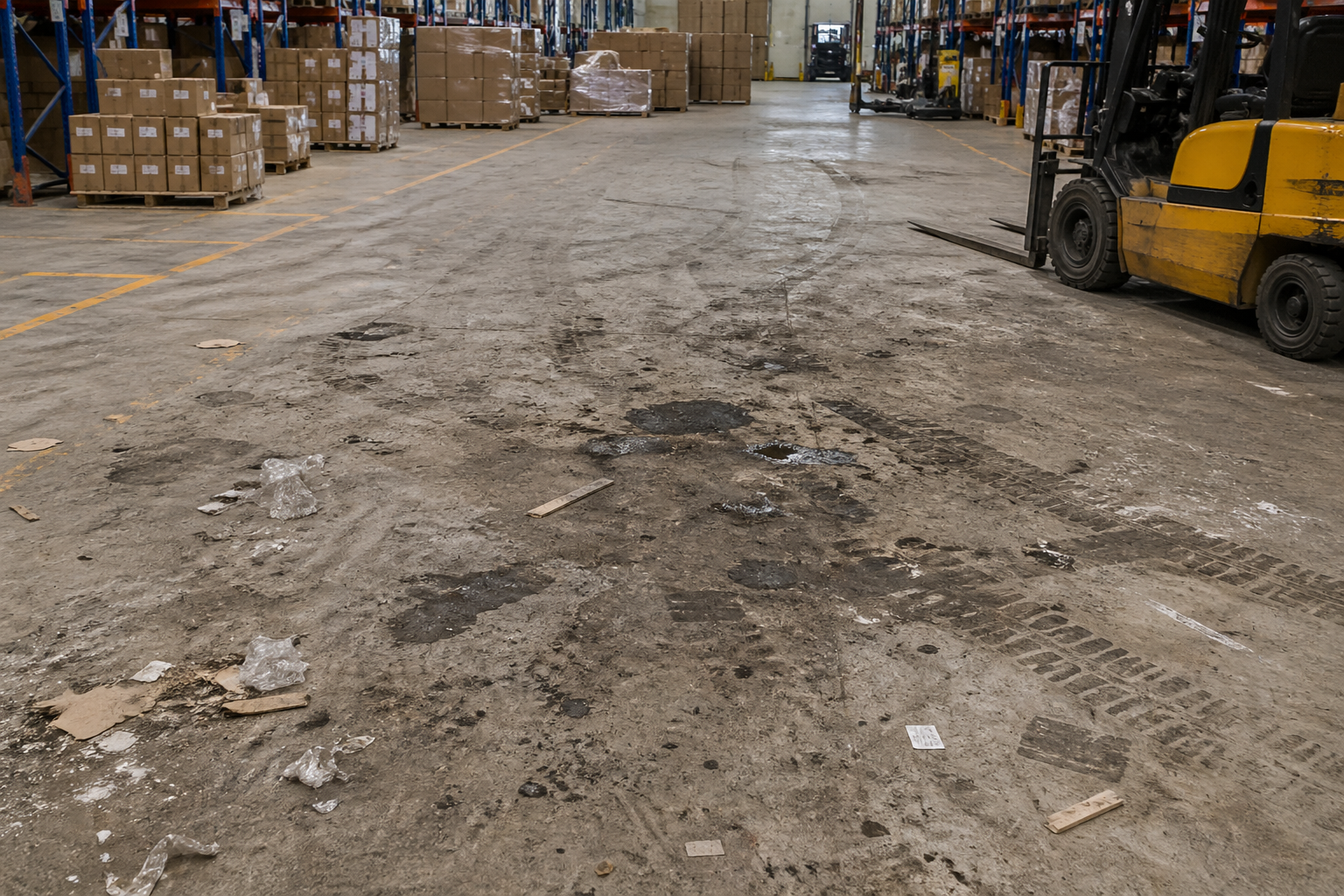
Concrete/Warehouse Floors
Concrete floors, especially in heavy-use warehouses and industrial facilities, are notorious for embedded dirt, oil spills, tire marks, and years of wear. These floors demand heavy-duty industrial floor scrubbers equipped with:
- High-pressure rotary brushes (typically nylon or steel wire for stubborn stains)
- Adjustable downforce settings to agitate deep-set grime
- Heavy-duty squeegee systems to handle large volumes of dirty water and prevent residue buildup. Without these features, you will struggle to remove ingrained dirt, leading to gradual floor degradation and persistent slip risks for workers and equipment.

Epoxy Floors/Factory Workshops
Epoxy and resin floors are common in food processing plants, electronics factories, and pharmaceutical facilities, valued for their smooth, non-porous finish. However, they are also highly susceptible to scratching, chemical damage, and water pooling. The ideal scrubber for these spaces must include:
- Soft, non-abrasive brushes (polyester or natural fiber) to avoid scuffing the epoxy surface
- Precision water flow control to prevent over-wetting and waterlogging seams
- pH-neutral cleaning solution compatibility to avoid discoloration or chemical breakdown of the epoxy coating
- Anti-tipping safety features, as epoxy floors can become slippery when wet during cleaning
Tile Floors/Shopping Malls and Retail Spaces
Ceramic and porcelain tile floors in shopping malls, grocery stores, and public lobbies present a dual challenge: high foot traffic leading to dirt accumulation in grout lines, and tight spaces between shelving, displays, and counters. Walk-behind floor scrubbers are the most practical choice here, thanks to:
- Compact, maneuverable frames that navigate narrow aisles and crowded spaces
- Oscillating brushes that agitate grout lines to remove embedded dirt
- Low-profile squeegees that reach under displays and fixtures
- Quiet operation to avoid disrupting customer experiences during business hours
Large Open Areas: Airports, Distribution Centers, and Parking Garages
For sprawling spaces with few obstacles—such as airport terminals, logistics warehouses, and parking garages—cleaning efficiency is non-negotiable. Ride-on floor scrubbers are engineered for these environments, offering:
- Wide brush paths (up to 40+ inches) to cover thousands of square feet per hour
- High-capacity solution and recovery tanks to minimize refills
- Ergonomic operator stations for extended shifts, reducing fatigue
- Advanced navigation features (in premium models) to handle long, continuous cleaning runs without manual guidance
Pro Tip: The size of your cleaning area is directly proportional to the required tank and brush specifications. As a rule of thumb, facilities over 3,000 square meters will benefit significantly from ride-on models, while spaces under that threshold can be efficiently serviced by walk-behind units.
Step 2: Walk-Behind vs. Ride-On Floor Scrubbers: Which Fits Your Operational Needs?
The choice between walk-behind and ride-on floor scrubbers hinges not just on your space size, but also on labor availability, shift schedules, and long-term operational costs.
Walk-Behind Floor Scrubbers: The Versatile Workhorse
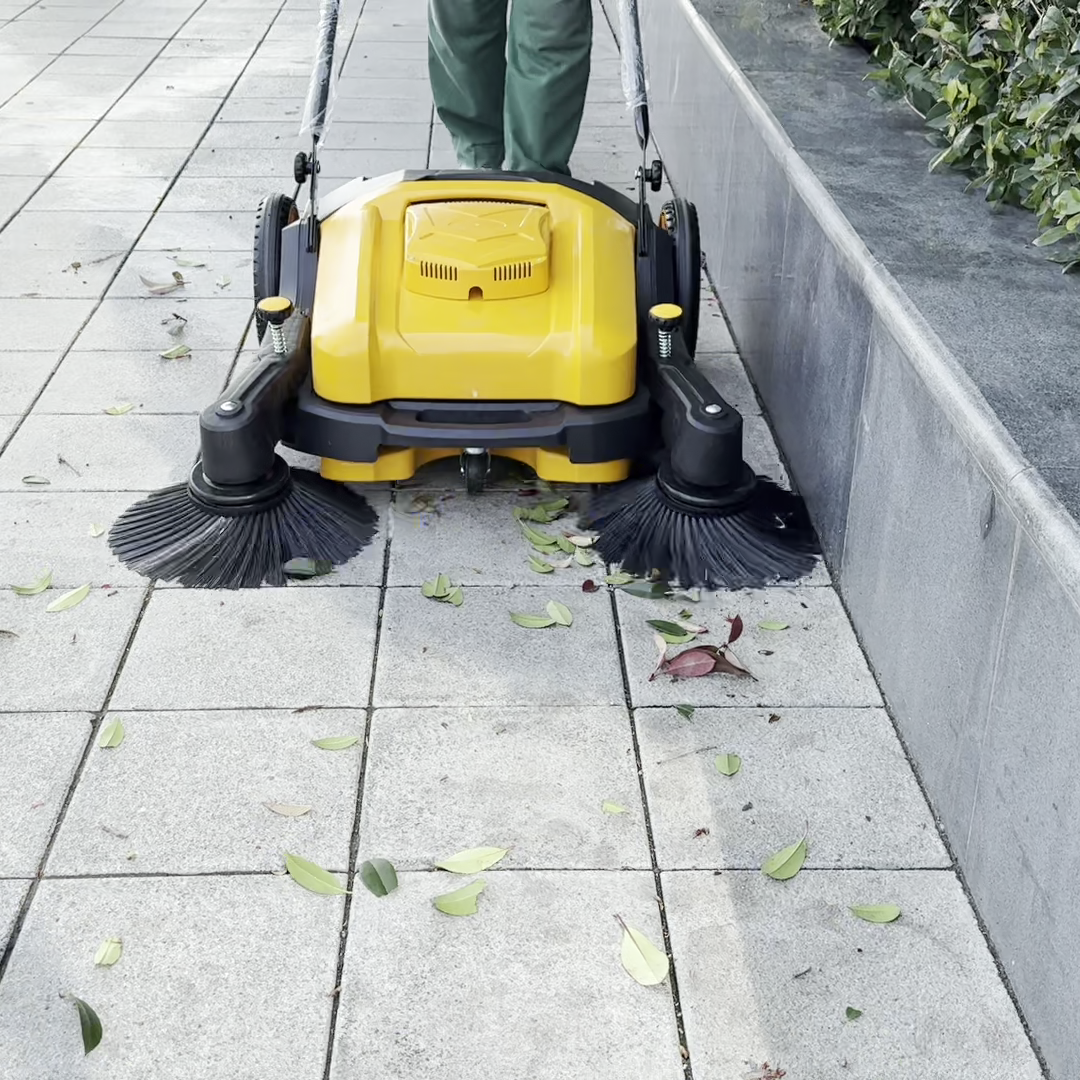
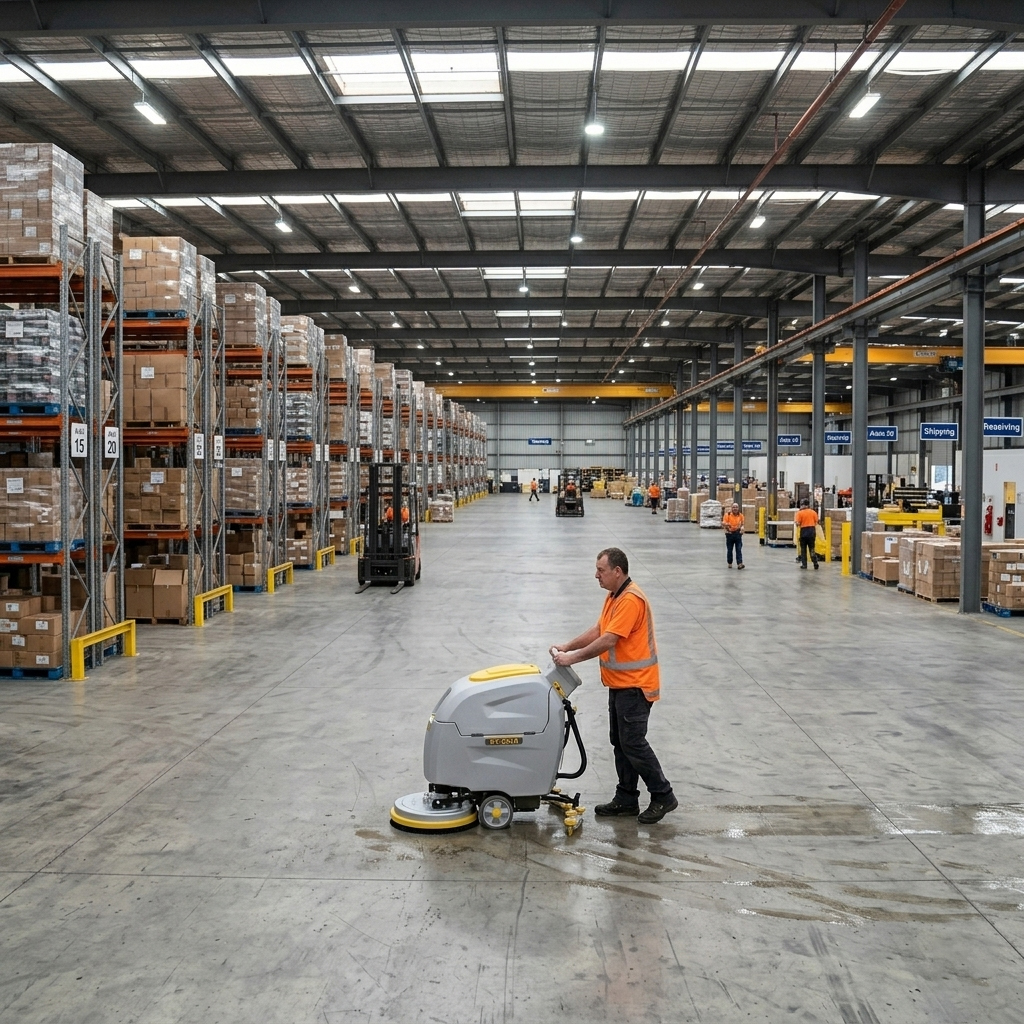
Walk-behind floor scrubbers are the most common choice for small-to-medium commercial spaces, and for good reason:
- Cost-Effective: Lower upfront purchase price and reduced maintenance costs compared to ride-on models
- User-Friendly: Minimal training required for operators, with intuitive controls and lightweight frames
- Maneuverable: Ideal for tight corners, stairwell landings, and multi-level facilities
- Best Suited For: Areas of 500–3,000 square meters, including supermarkets, schools, clinics, and small retail stores
For facilities with irregular layouts or limited storage space, a compact walk-behind scrubber is often the most practical long-term investment.
Ride-On Floor Scrubbers: The High-Efficiency Solution
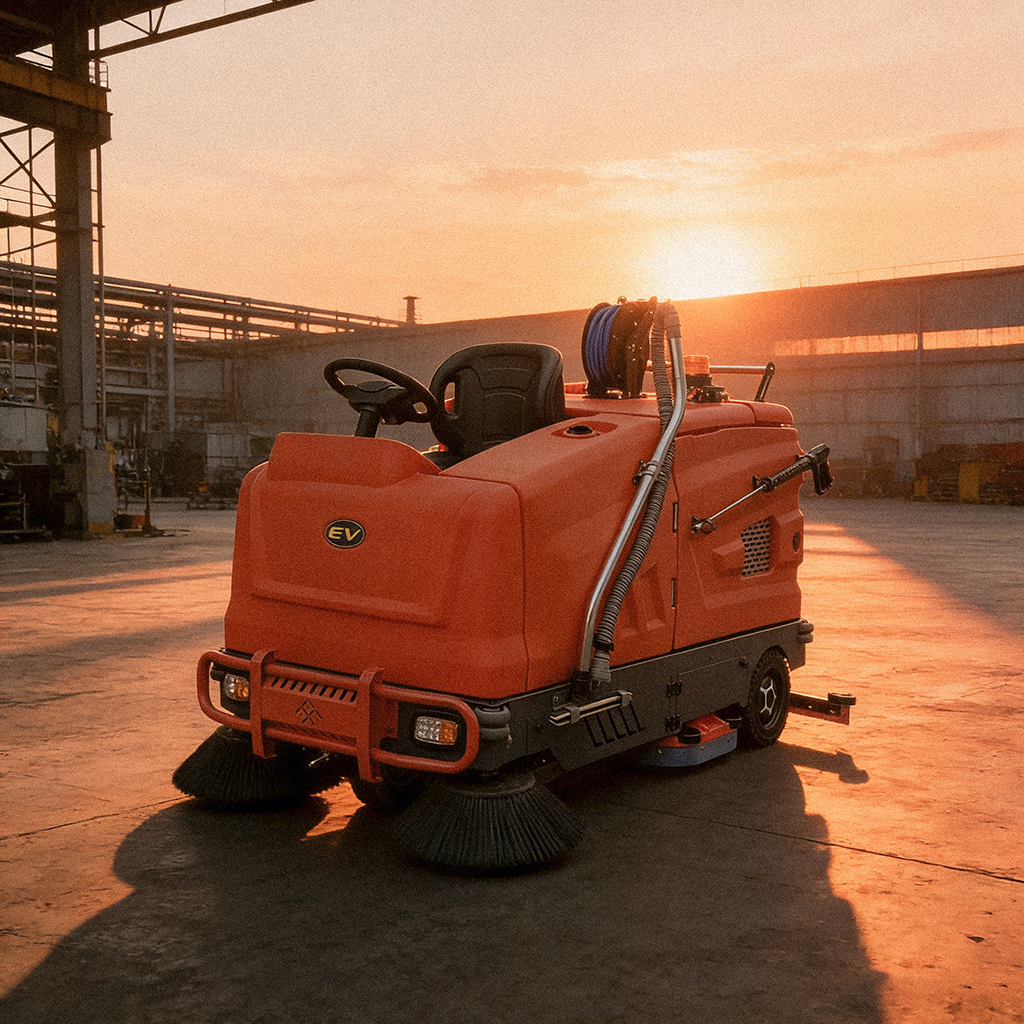
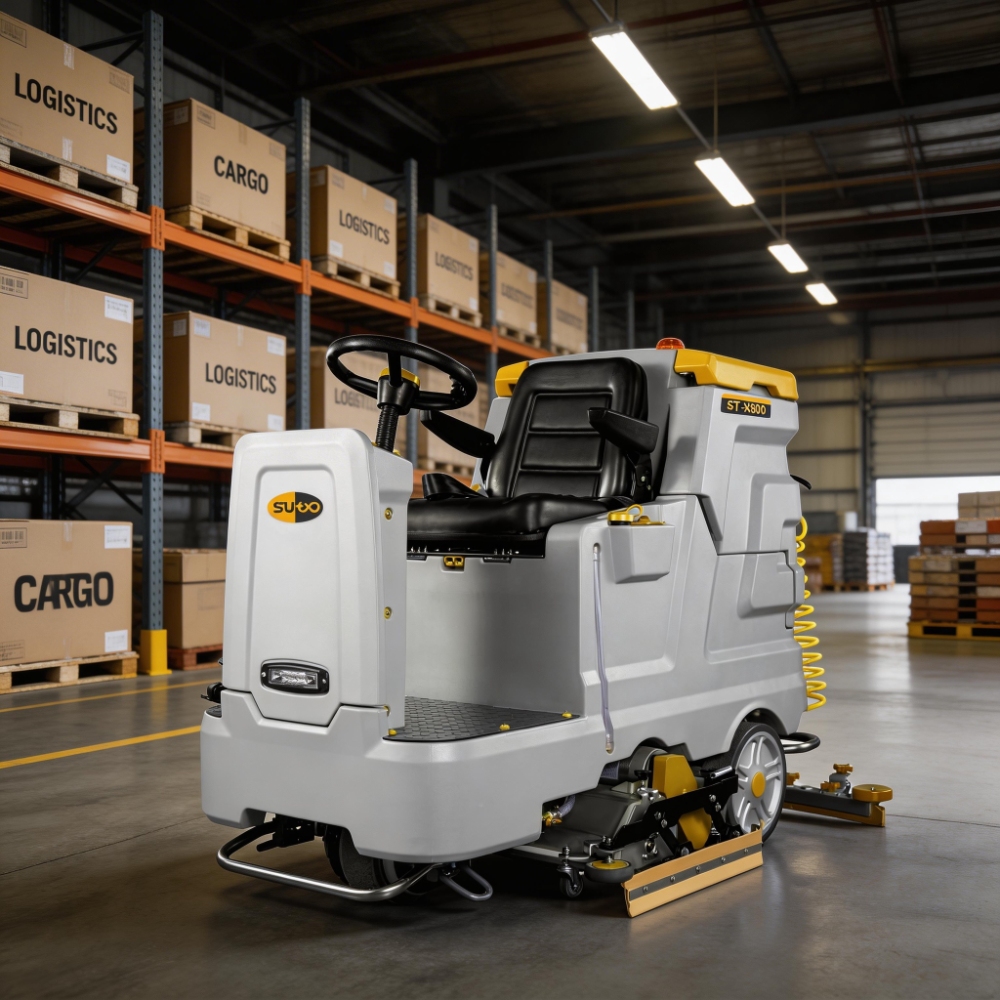
For large-scale operations, ride-on floor scrubbers deliver unmatched productivity and labor savings:
- Superior Productivity: Cover 2–3 times more square footage per hour than walk-behind models, cutting cleaning time by 60–70%
- Reduced Operator Fatigue: Ergonomic seats, adjustable controls, and automated functions mean operators can work full shifts without burnout
- Lower Labor Costs: Fewer cleaning hours required, even for large facilities, reducing reliance on temporary staff or overtime
- Best Suited For: Warehouses, airports, parking lots, and manufacturing plants over 3,000 square meters
While ride-on models have a higher upfront cost, their efficiency gains often lead to full ROI within 1–2 years for large facilities.
Step 3: Key Technical Specifications to Prioritize
Beyond floor type and size, the internal components of your scrubber will determine its performance, uptime, and longevity. Focus on these critical specifications:
Tank Capacity and Runtime
Uninterrupted operation is the backbone of commercial cleaning. A machine that requires frequent stops for refills will derail even the most well-planned cleaning schedule.
- Walk-Behind Models: Aim for a solution tank of 40–80 liters and a recovery tank of equal or slightly larger size, paired with a battery runtime of 3–5 hours per charge.
- Ride-On Models: Look for solution tanks of 90–150 liters and recovery tanks to match, with battery life ranging from 4–8 hours to handle full shifts.
- Battery Type: Lead-acid batteries are budget-friendly but require regular maintenance, while lithium-ion batteries offer longer lifespans, faster charging, and zero maintenance—ideal for 24/7 operations.
Brush Width and Agitation Power
The brush width directly impacts cleaning speed, while the agitation power determines how effectively the machine removes dirt:
For heavy-duty industrial use, prioritize models with adjustable brush pressure (up to 100+ lbs of downforce) to tackle stubborn stains without damaging floors.
Walk-behind scrubbers typically feature brush widths of 17–24 inches, while ride-on models range from 28–33 inches (and up to 40 inches for industrial-grade units).
Squeegee System
high-quality squeegee system is essential for leaving floors dry and slip-free. Look for:
- Heavy-duty rubber blades (replaceable, for easy maintenance)
- Wide, curved squeegee designs that adapt to uneven floors
- Anti-vacuum leak seals to ensure maximum water recovery
Step 4: Maintenance and After-Sales Support: The Hidden Cost of Ownership
A floor scrubber is a long-term investment, and its lifespan depends heavily on ongoing maintenance and manufacturer support. The best machines in the world will fail to deliver value without reliable service and parts access.
When evaluating manufacturers, prioritize those that offer:
- Comprehensive Spare Parts Supply: Easy access to replacement brushes, squeegee blades, filters, and batteries ensures minimal downtime.
- Detailed Service Manuals: Step-by-step guides for routine maintenance (e.g., tank cleaning, brush replacement) empower your team to perform basic repairs in-house.
- Online and On-Site Technical Support: Live chat, video tutorials, and regional service teams are invaluable for troubleshooting complex issues.
- Easy-to-Maintain Design: Look for machines with tool-free brush changes, quick-access tanks, and modular components that reduce repair time.
With proper maintenance, a commercial floor scrubber can last 5–7 years, making after-sales support just as important as the machine’s initial performance.
Conclusion: Align Your Choice with Long-Term Facility Goals
Choosing the right commercial floor scrubber is not just about picking a machine—it is about selecting a solution that aligns with your facility’s floor type, cleaning area, labor budget, and long-term operational needs. Whether you opt for a compact walk-behind model for a retail space or a high-powered ride-on scrubber for a sprawling warehouse, the right machine will reduce labor costs, improve safety, and extend the life of your floors.
At [Your Brand Name], we specialize in manufacturing walk-behind and ride-on industrial floor scrubbers tailored to the unique demands of warehouses, factories, retail spaces, and more. Our team of cleaning experts can help you analyze your facility’s specific needs, test different models, and design a custom cleaning solution that delivers maximum efficiency and value. If you are ready to find the perfect floor scrubber for your facility, contact us today for a personalized consultation and product demonstration.